Nietzsche: Dancing Among the Ruins
“Every day without dancing is a day that betrays life.”
If God is dead, how can a person avoid being consumed by meaninglessness? Nietzsche spent his life seeking an answer: do not retreat or become numb. Dance among the ruins, become the author of your own values, and affirm life with the fiercest love—even at the cost of solitude and madness.
Dionysus Reborn Among the Ruins
Basel, 1872. Twenty-eight-year-old Nietzsche stood in an empty classroom. Not one new student had enrolled that semester. Three years earlier he had been the university's youngest professor. Now he felt like the academic world's laughingstock.
On his desk lay a copy of his own The Birth of Tragedy, its title page torn out. In it, he had challenged an entire age.
By the middle of the nineteenth century, scientific rationalism was sweeping Europe. Scholars declared that reason and logic could unlock every mystery. Since Socrates, Western civilization had treated reason as its highest standard: everything must pass a logical test and submit to moral discipline.
Nietzsche saw a fatal weakness in that system.
When he was four, his father died painfully of a brain illness; his younger brother died soon afterward. Death opened a fissure in his life. If existence was so fragile and brief, what made it worth living? Reason could build faster trains, but could it answer the simplest question: what do we live for?
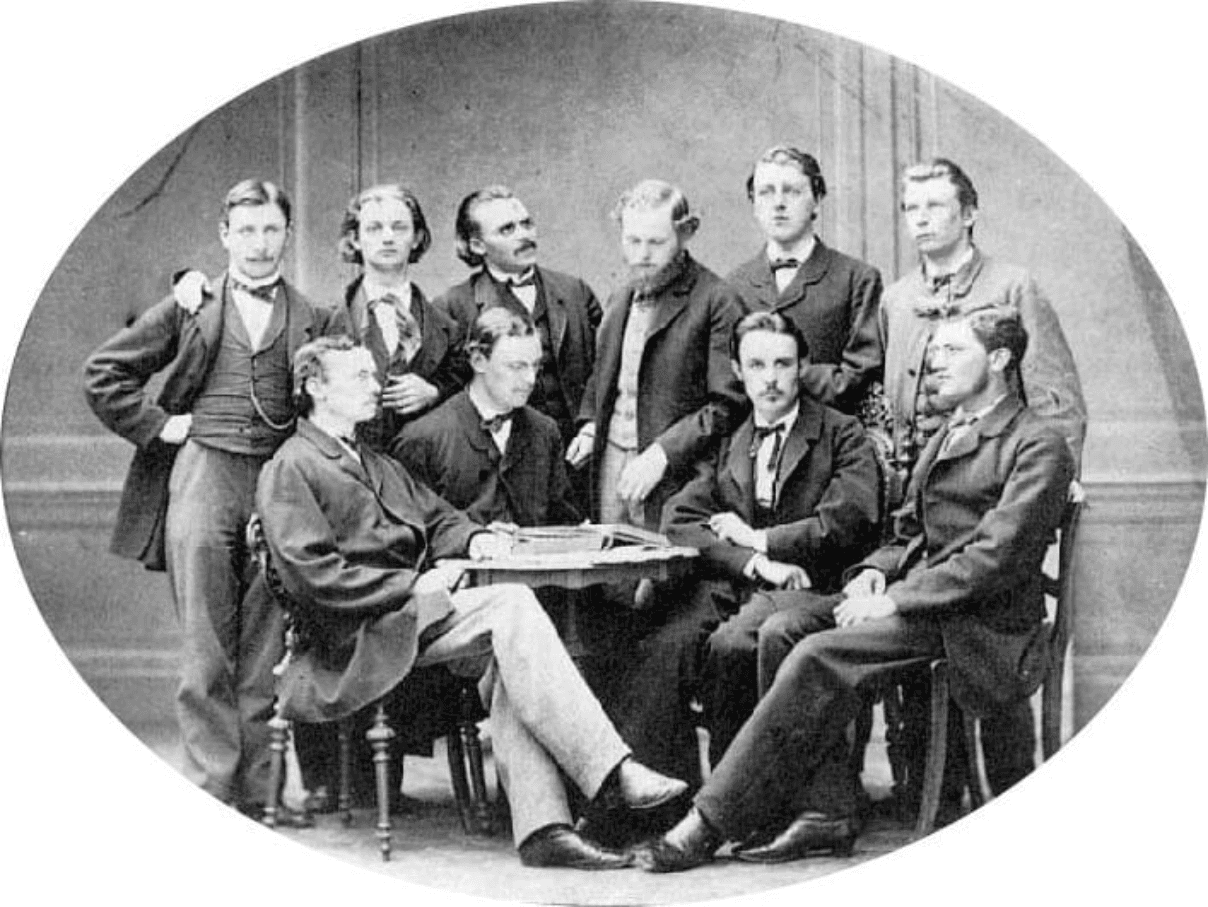
With fellow students in Leipzig, 1866
At twenty-one, he opened Schopenhauer's The World as Will and Representation in a secondhand bookshop in Leipzig. Its pessimism stripped away optimism's disguise: the world was driven by a blind will to live; existence swung between pain and boredom. Art offered a brief release, while asceticism sought to extinguish desire altogether.
That cold shock awakened Nietzsche. At last, someone seemed to be speaking honestly.
But should a meaningless world lead us to reject life and escape the will? He could not accept that answer. He kept searching.
Studying ancient Greek tragedy, he found that the Greeks before Socrates had faced life's cruelty: violent fate, destruction, and the absurdity of existence. They had not surrendered to emptiness. They had created tragedy.
Onstage, people confronted death and suffering. Through the chorus's music and the rhythm of verse, an unbearable truth became something approaching sacred beauty.
Nietzsche called this power Dionysian: an original force of life, intoxicated, chaotic, destructive, and also the source of creativity. The rational tradition since Socrates, he argued, had diminished it.
In The Birth of Tragedy, he declared that existence and the world were justified only as an aesthetic phenomenon. Meaning was made, not merely found. Rather than demanding that the world explain itself, a person could live as an artist and make a work of life itself.
The response was academic exile.
God Is Dead; the Spirit Must Be Free
Rejected by scholars, Nietzsche placed his hope in another figure.
When he first met Wagner in 1868, the composer's operas overwhelmed him. Their Dionysian intoxication and turbulence seemed to embody his ideal of art redeeming life. He defended Wagner in writing and imagined him as the standard-bearer of a German cultural renewal.
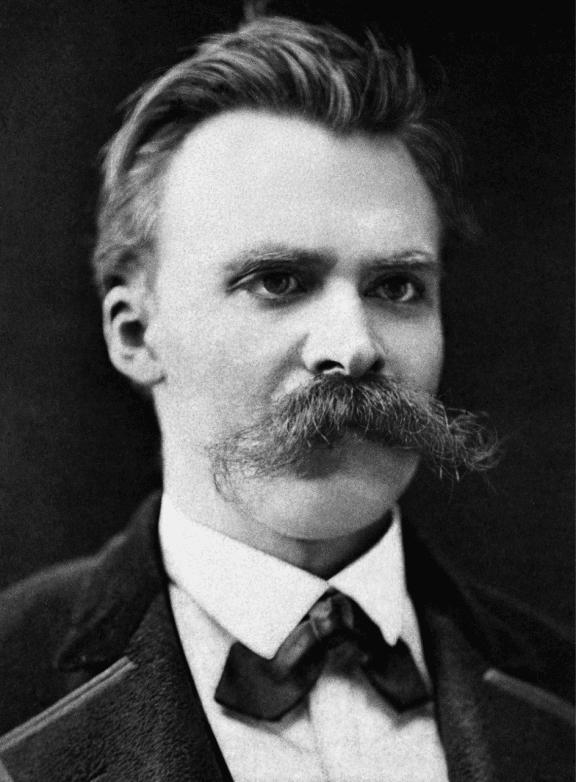
1875
Then came 1876.
At thirty-one, Nietzsche attended the opening of the Bayreuth Festival. Emperors, nobles, and wealthy patrons gathered in splendor. Perfume and power filled the room. As the music began, his disappointment deepened. He despised the complacency of the audience around him.
They had come for entertainment rather than an encounter with life's tragedy. Wagner, whom Nietzsche had revered, appeared comfortable with their applause, using grand Germanic myths to satisfy nationalist sentiment.
Nietzsche left before the performance ended. He felt that the music had become another anesthetic: a few easy tears inside the theater, followed by the same unthinking life outside it.
To remain honest with himself, he had to break with a spiritual father. He parted from Wagner and reconsidered the value of art.
At the same time, his body was failing him: severe migraines, near blindness, vomiting, and nights without sleep.
Out of that suffering came Human, All Too Human, subtitled A Book for Free Spirits. A free spirit, for him, was someone who escaped inherited dogma, conventional opinion, and the worship of idols—someone willing to breathe the cold air of truth alone.
He dissected what people called exalted: morality as consolation, religion as fear of death, even art as an embellishment of reality. As scientific reason undermined religious belief, the death of God left people without ready-made meaning.
How, then, could one go on living?
In 1879, at thirty-four, Nietzsche resigned his permanent professorship at Basel. Leaving behind the clothing and status of academic life, he took a worn suitcase and set out alone toward the Swiss mountains.
It was a thoroughgoing exile. He left behind God, salvation, and dependence on external support.
Eternal Recurrence and the Will to Create
In August 1881, shortly before his thirty-seventh birthday, Nietzsche was walking in the woods near Sils Maria in Switzerland.
He was lonely, ill, and little read. By ordinary measures, his life seemed a failure. Beside Lake Silvaplana, near a large pyramid-shaped rock, an idea struck him like lightning.
For two years he had wandered with a question: if every inherited value collapsed, where could an affirmation of life begin?
Schopenhauer urged release from desire and suffering. Christianity promised another life beyond this one. Nietzsche saw both as refusals to face this life, here and now.
At the lakeside he imagined a frightening possibility: what if this life, with every pain, failure, and humiliating moment, had to repeat forever, unchanged, without redemption? Could you accept it?
This was the thought experiment of eternal recurrence. To a sick, wandering man, it might have seemed the cruelest curse.
Yet after the first shudder came exhilaration. He had found an answer: love of fate.
No demand for another world, for compensation, or for a different past. Face the incompleteness, pain, smallness, and joy of this life, and affirm it without reservation.
Only when you could will this life to return endlessly would each choice acquire the weight of eternity.
The idea occupied him for more than a year. In February 1883, he wrote the first part of Thus Spoke Zarathustra in ten days. His prophet descended from the mountain to announce the death of God and the need to become the Übermensch.
What was this Übermensch? In this reading, neither a superior race nor a powerful ruler, but a person who could withstand the test of eternal recurrence and create their own values.
With external standards gone, the decision becomes one's own. No god will tell me how to live. I will not depend on other people's judgments, inherited discipline, or promises of an afterlife. I will enter this living world fully, legislate for myself, and give my life meaning.
Nietzsche called this creative force the will to power: understood here as the will to shape oneself rather than dominate others, to make life into a work of art. To harvest life's fullest fruit was to live dangerously and dance amid the ruins.
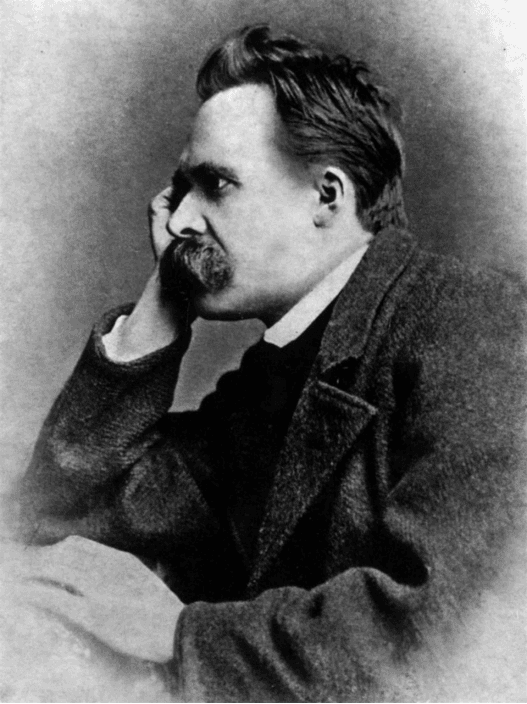
Portrait, September 1882
Dancing Alone; Thoughts That Outlive Their Author
In 1885, Nietzsche completed the fourth part of Thus Spoke Zarathustra. He called the work a gift to humanity.
Few seemed willing to receive it.
He paid for its printing and sent it to friends. Silence or ridicule followed. He felt that Europe did not understand him. His time, he wrote, had not yet come; some people are born after their deaths.
Illness worsened and solitude deepened. In that darkness he wrote with astonishing intensity: Beyond Good and Evil, On the Genealogy of Morality, and Twilight of the Idols. In January 1889, at forty-four, he suffered a collapse in Turin. The famous account of him embracing a horse being beaten by its driver has come to symbolize that moment: an encounter with suffering at the edge of endurance.
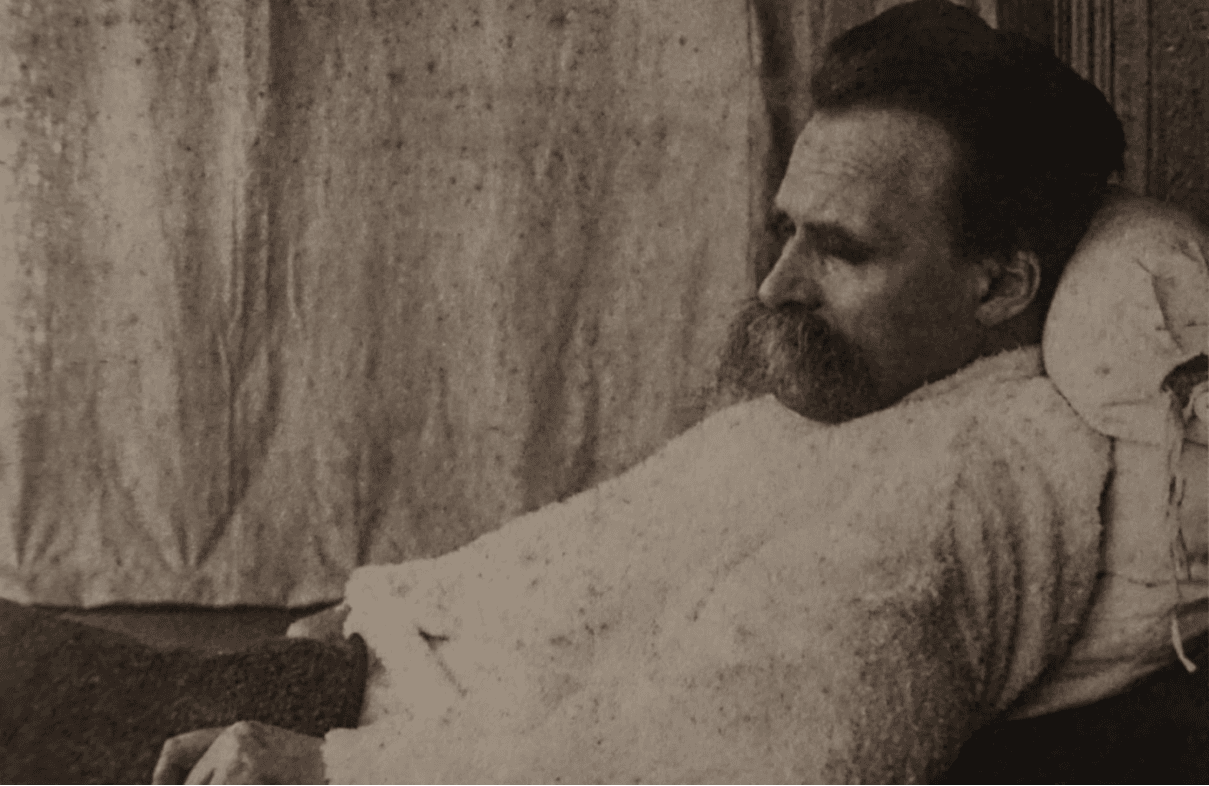
His final years in Weimar, summer 1899
Nietzsche died in 1900. For his final eleven years, he was largely incapacitated. During those same years, his ideas began spreading across Europe, reaching people living among the ruins he had described.
Epilogue
On the ground left bare by the death of God, in darkness where he felt misunderstood, Nietzsche kept dancing.
In Thus Spoke Zarathustra, his prophet asks his followers to lose him and find themselves; only after denying him can they meet again.
His life calls for an ardent affirmation of existence, even when it is wild, absurd, and inexplicable. It calls for creating meaning, even without applause, even at the end of the road.
When you can will this life to return endlessly, you become the dancer of your own eternity.