Jung: A Leap into the Inner Darkness
“I would rather be whole than good.”
Becoming oneself means entering the darkest corners within, speaking with what lives there, and making those encounters part of one's own name. After fragmentation, light and darkness, reason and feeling, the worldly and the sacred may come together into a more complete life.
To Be, or Not to Be
Zurich, 1913. Cold rain struck the window. Thirty-seven-year-old Jung sat in a dim study, staring at the last chapter of his manuscript: “The Sacrifice.”
He had been unable to finish those pages for two months. If he threw them into the fire, he could remain Freud's favored successor, secure in the leadership of the International Psychoanalytical Association and the esteem of European scholars.
But he felt that the crown would cost him part of his soul.
Closing his eyes, he listened to his racing heart. Since questioning his teacher's emphasis on sexuality, he had sensed that peace, professional security, and their close friendship might disappear. He could not ignore what he believed he had glimpsed in the human psyche: ancient images that seemed to break through repression and demand to be heard.
His pen hovered. Should he keep playing the perfect crown prince, or step toward a truth whose consequences he could not control?
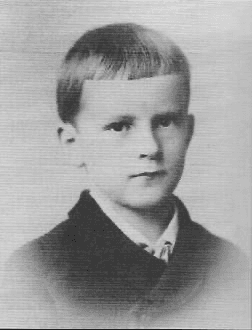
1880
A Long Struggle with the Mask
Return to the Swiss countryside of the 1880s. Jung's father, a pastor, struggled with his faith. His mother, after a stay in hospital for depression, remained troubled by profound changes in mood.
In that uncertain household, young Jung often felt afraid and stifled. He carved a small figure from a yellow wooden ruler, dressed it in a black coat, and hid it in the attic. In moments of pain or conflict, he slipped upstairs with notes written in a language of his own. These were among his earliest memories of an inward conversation.
From the age of eleven, he recognized a division between two selves. By day at school in Basel, he tried to fit in and please his parents despite difficulties with mathematics. Alone at dusk, another self seemed to emerge: old, grave, and mysteriously connected with nature and God. He called it personality No. 2.
The division did not disappear as he grew older. As a university student with little money, he chose medicine, studying cells, bones, and pathological specimens while pushing aside his fascination with myth, antiquity, and the soul. He did well, but felt increasingly lifeless. Medicine spoke to the body; where was the inner life?
Then, near graduation, he opened Krafft-Ebing's textbook of psychiatry. Psychiatry was a marginal and often disparaged field. Yet its introduction caught him: mental illness concerned the person as a whole.
His heart raced. Here, objective biology met the obscurity of the psyche. Psychiatry seemed capable of joining his professional identity with the questions that mattered most to him.
That night, he believed he had found his path into the depths.
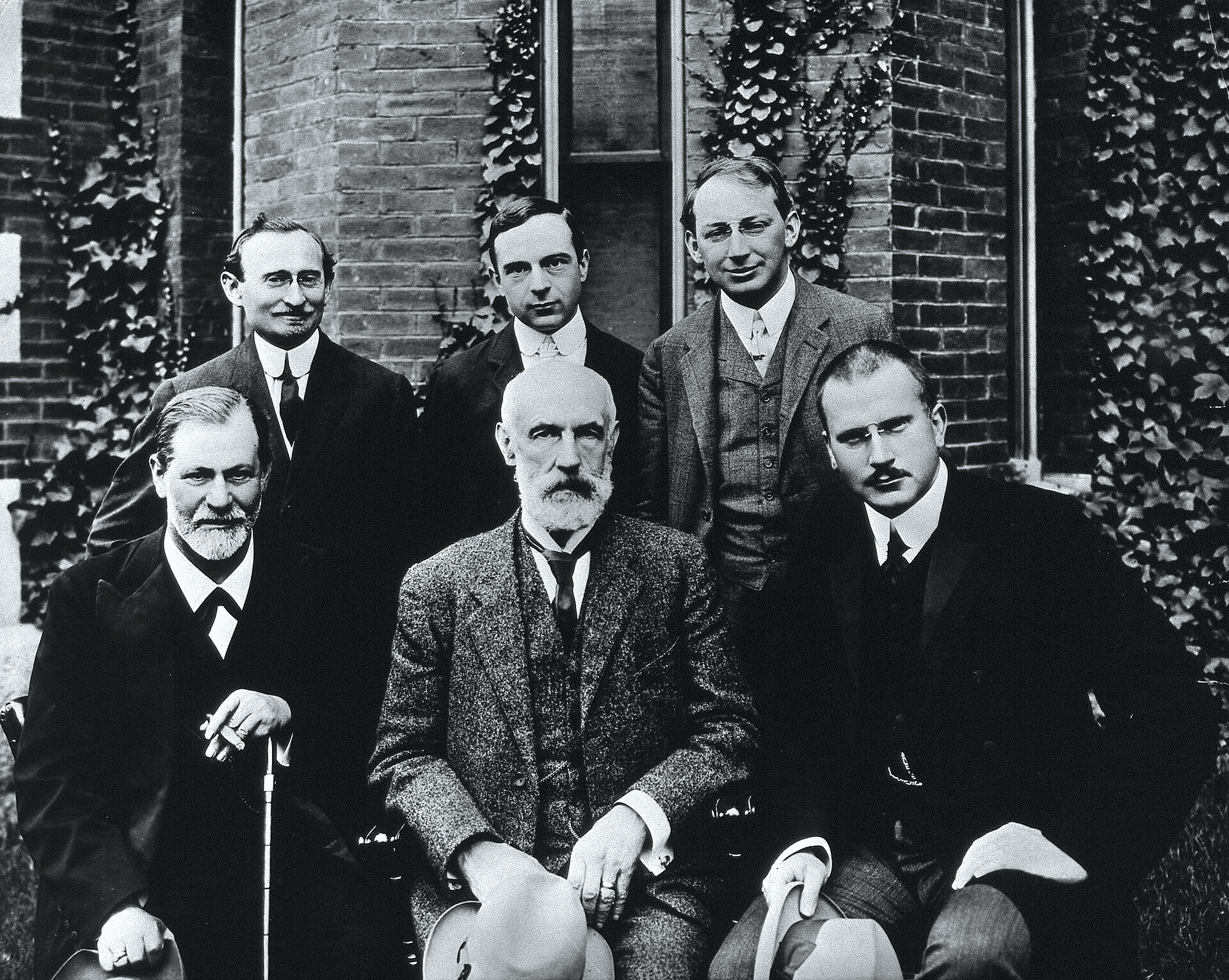
Clark University, United States, 1909. Freud is at the left of the front row; Jung is at the right.
Recognition, Then a Break with the Father
Vienna, 1907. Late at night, conversation still filled the study at 19 Berggasse.
Jung and Freud's first meeting lasted thirteen hours, from afternoon into the night. They seemed like two miners who had worked alone in darkness and finally heard another person's pick.
For Jung, long accustomed to searching alone, Freud's insight and generous recognition answered a deep longing for a strong father. Freud saw him as an heir to psychoanalysis. Jung thought he had found shelter for his inner life.
But their affinity soon encountered a hard limit.
Jung felt that Freud's theory of sexuality had become unquestionable. In Jung's later account, Freud urged him never to abandon it: it must stand as a firm defense against the dark tide of occultism.
Jung was unsettled. Could human creativity, the attraction of myth, and the desire for wholeness really be reduced to disguises of sexual instinct?
A further rupture came during their Atlantic crossing in 1909. While interpreting a dream of Freud's, Jung asked for personal details that might help explain it. The exchange abruptly chilled.
Freud, Jung recalled, said that he could not risk his authority.
Jung fell silent. To him, the thinker who had explored humanity's unconscious seemed unwilling to expose his own.
The years after returning to Switzerland brought a painful separation. As Jung worked on the final chapter of Transformations and Symbols of the Libido, the pages remained blank for sixty days.
Writing would mean breaking with a father figure, severing the recognition and promising future that followed their thirteen-hour conversation, and returning to intellectual solitude. He sat at his desk late at night, hearing distant bells, unable to continue.
Finally, he stopped looking toward Vienna. He wrote that libido was not confined to sexual drive but could be understood as a wider psychic energy behind human creativity. For him, reducing that force to sexuality diminished the creative life of the psyche.
As the words reached the page, he felt the cold of the isolation he expected to follow.
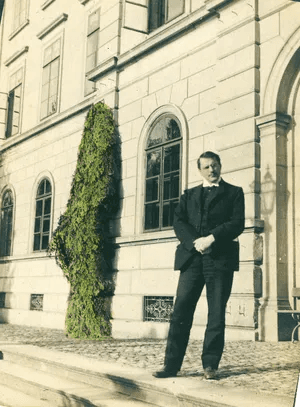
Zurich, 1909
Into the Depths, Toward Wholeness
After the break, Zurich seemed quieter than any winter.
With the publication of Transformations and Symbols of the Libido, Jung had lost an important source of support. Yet the most frightening struggle was within.
In the long nights of late 1913, he often sat alone, shaken by images. Instead of analyzing the unconscious only from a rational distance, he tried to approach it directly. Floods covering lowlands, seas turning to blood, Europe in ruins: immense and disturbing visions seemed to break into ordinary life.
As a psychiatrist, he worried about what these experiences might mean. Was he losing his grasp on reality?
Jung chose to confront the images rather than retreat from them.
Through the practice he called active imagination, he tried to remain conscious while engaging the figures that arose within. He set aside the protective distance of the physician and listened to what appeared.
Among those figures was Salome, a blind young woman associated with feeling, intuition, and desire. The scientific identity he valued initially recoiled from her. Gradually he approached the figure as an expression of qualities he had suppressed, connected with what he called the anima.
In Jung's framework, a person who identified too strongly with rationality and toughness could become divided from feeling. Bringing rejected qualities into awareness offered a way toward a less fragmented self.
He began recording these encounters in a large red volume. With elaborate lettering, drawings, and richly colored images, he gave form to conversations with the unconscious.
The work later known as The Red Book became a record of that demanding inner exploration.
The journey was painful. Yet amid the images and self-questioning, another possibility began to take shape.
What first appeared alien or threatening could become part of a larger conversation. This was central to the process Jung called individuation.
Becoming oneself, in this account, did not mean achieving moral perfection. It meant recognizing rejected aspects of the person and seeking a relationship between opposing forces: light and darkness, masculine and feminine, consciousness and the unconscious.
The inner pattern began to become clearer.
Jung's work widened psychological inquiry beyond the analysis of illness toward questions of human development and meaning. Its influence reached art, mythology, and psychotherapy, leaving later readers a language for inward exploration.
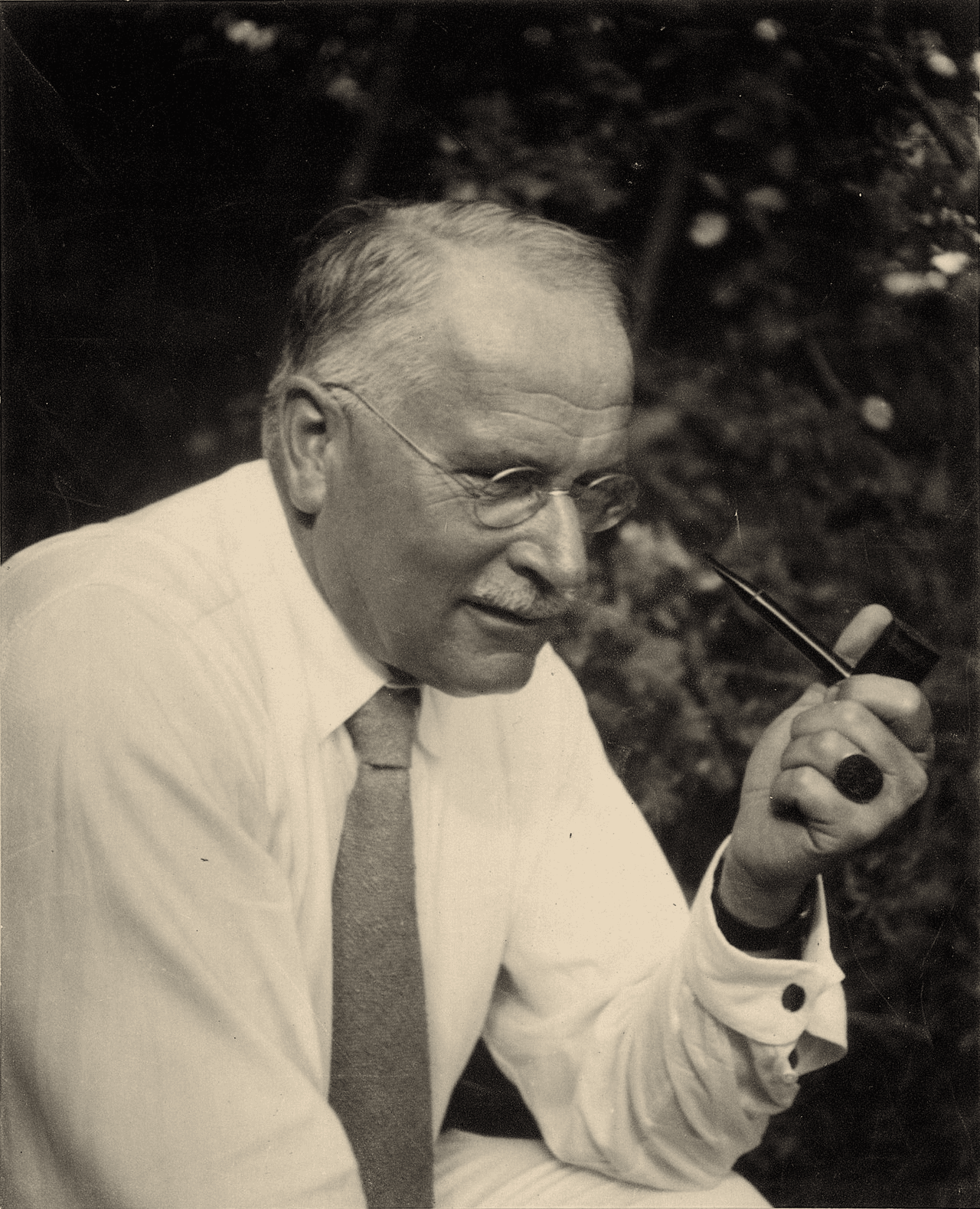
1935
A Tower for the Inner Life
In 1922, at forty-seven, Jung bought land at Bollingen on the shore of Lake Zurich.
He began building with stone and mortar, working with his hands.
Without electricity or running water, daily life involved chopping wood, making fires, drawing water, and hearing wind move through the trees. He returned to an older relationship with earth and fire.
The tower grew in stages: a round structure, further rooms and towers, then an enclosed courtyard. In this essay's reading, its forms gave outward expression to the process of inner integration. Stone by stone, the division between mask and self acquired a place in the world.
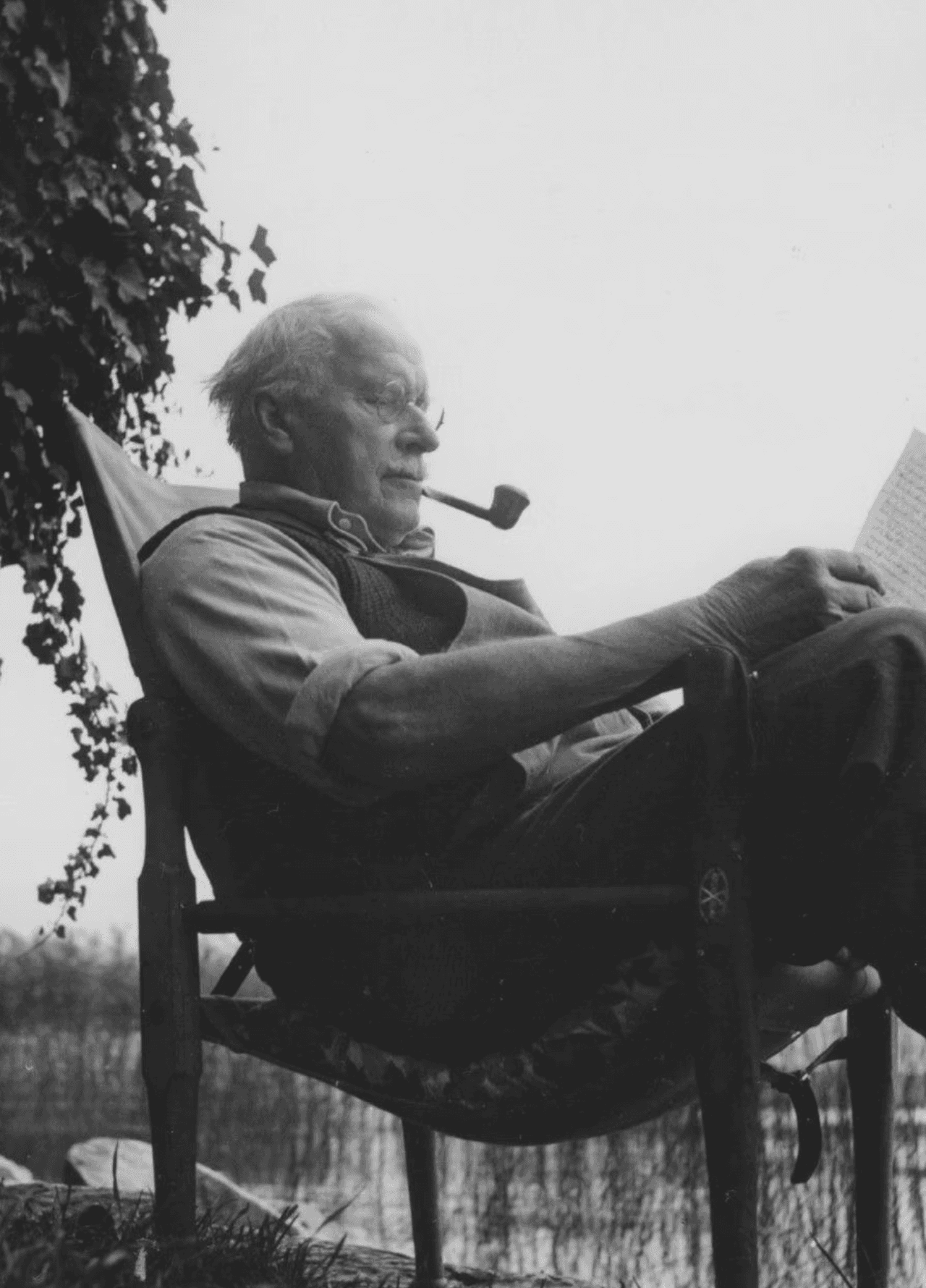
Imagine a quiet afternoon in 1957: eighty-one-year-old Jung beside the walls he had helped build, watching light move across the lake. After conflict and upheaval, the setting offered an image of a life becoming its own.
In Memories, Dreams, Reflections, he described his life as a story of the unconscious realizing itself.
1955